
Inti Raymi is an ancient Inca religious celebration in which the Sun god, Inti, was worshipped in Cusco. In Inca times, Inti Raymi lasted about 15 days, during which sacrifices were made and dances performed to honor Inti. The last Inti Raymi held with the Inca emperor present took place in 1535 — one year before the Spanish conquest.
Today, Inti Raymi is a theatrical reenactment, drawing thousands of people from Cusco and around the world to take part in this major cultural and traditional celebration.
What Does the Sun Mean in Inti Raymi?
The Sun was — and still is — the central object of worship in Inti Raymi, representing its essence and source of life. For the Inca Empire, it was the supreme deity and one of the most important celestial bodies in the Andean worldview. During this festival, the sun marks the beginning of a new annual cycle, so offerings and rituals were dedicated to it so the Inca realm would prosper throughout the year.
The word Inti Raymi comes from Quechua: Inti means "sun," and Raymi means "festival" or "celebration." That's why Inti Raymi translates to "festival of the sun" or "celebration of the sun."
"Inti means Sun, and Raymi means festival or celebration. Together they form the name of the Inca Empire's greatest festivity: the Festival of the Sun."
Inti Raymi in the Time of the Incas
Inti Raymi was the largest and most important festival held during the time of the Tahuantinsuyo Empire. Its religion was based on sun worship, established in the 15th century by Inca Pachacútec as a religious reform.
This ceremony brought together the acllas, the ayllus, the imperial Inca army, representatives from each suyo, and other authorities — gathering nearly the entire population of the Tahuantinsuyo.
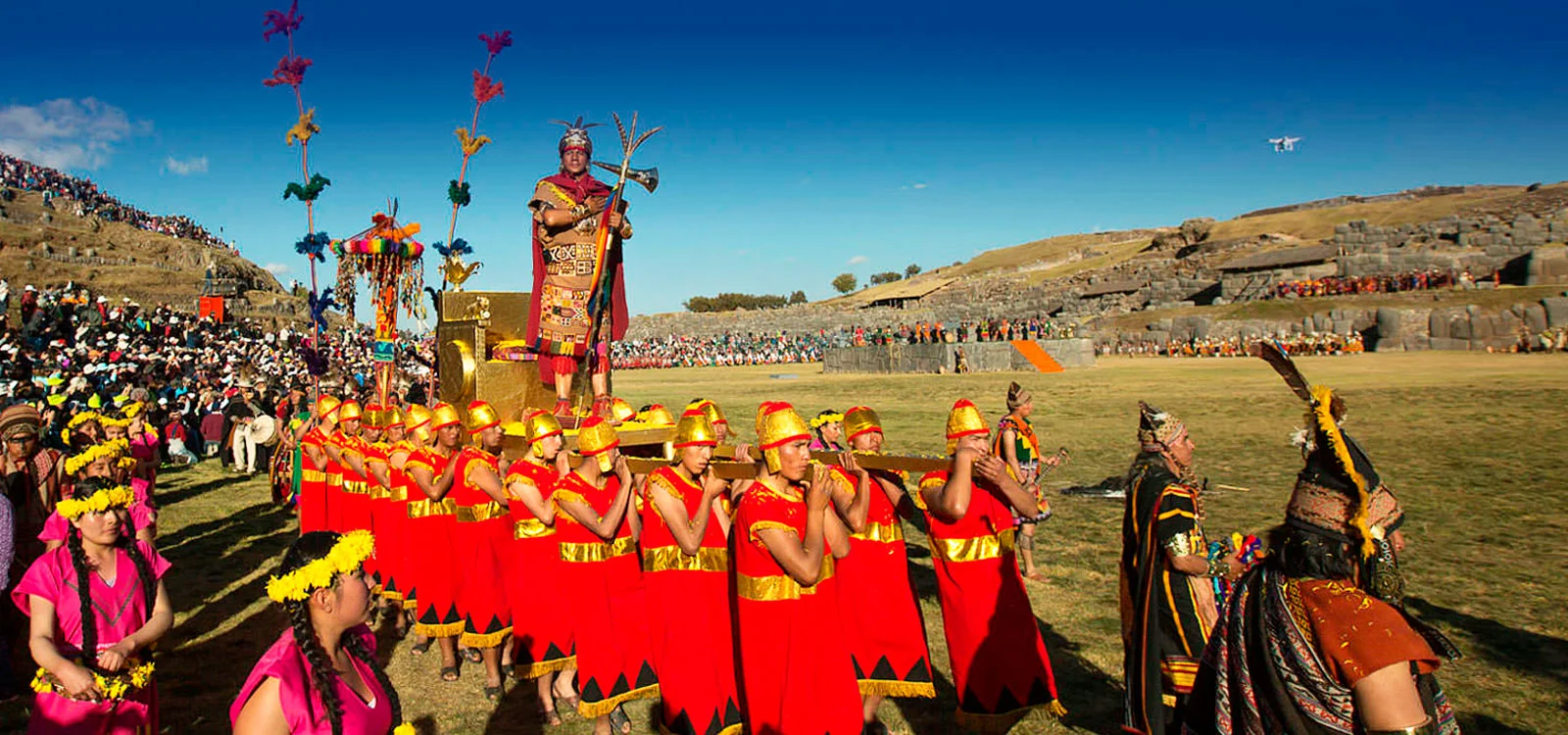
The Inca's entrance into the Plaza de Armas or the Sacsayhuamán esplanade was a solemn moment. The ceremony was preceded by the acllas, who scattered flowers, and by the pichaq, men who used straw brooms to sweep away evil spirits. The Inca, in his public appearances, was accompanied by his kumillo (a hunchbacked dwarf), who held the achiwa, a colorful feathered parasol.
During the conquest, Inti Raymi continued to be celebrated in secret. Later, the mestizo chronicler Inca Garcilaso de la Vega recorded the memory of this festival in his work Comentarios Reales.
The Evolution of Inti Raymi
Various Andean peoples already observed the sky, the solstices, and the equinoxes to organize agriculture. That's why the Incas inherited this solar tradition and took it to its fullest expression under the rule of Pachacutec. This celebration was also a political tool used to unify the four suyos around Cusco and to legitimize the Inca as the "son of the Sun."
This festival evolved to become the most important in the Empire, serving as an Andean New Year ritual and a renewal of the pact between the Sun, the Inca, and the Tahuantinsuyo. During the colonial era, the Spanish considered it an "idolatrous" rite and banned it as a public celebration. In 1944, Cusco artists recreated Inti Raymi based on chronicles such as those of Garcilaso, giving rise to the theatrical version we know today.
When Is Inti Raymi Celebrated?
The Inti Raymi festival is celebrated every June 24th. This day not only marks the celebration of the sun but is also Cusco Day, with multiple performances held throughout the month, especially on the main day, June 24th, when the reenactment of Inti Raymi takes place and hundreds of performers prepare to deliver their very best.
This 2026, the Inti Raymi celebration will take place, as it does every year, on June 24th, with music, traditional dances, and an unforgettable theatrical performance.
How Is Inti Raymi Celebrated?
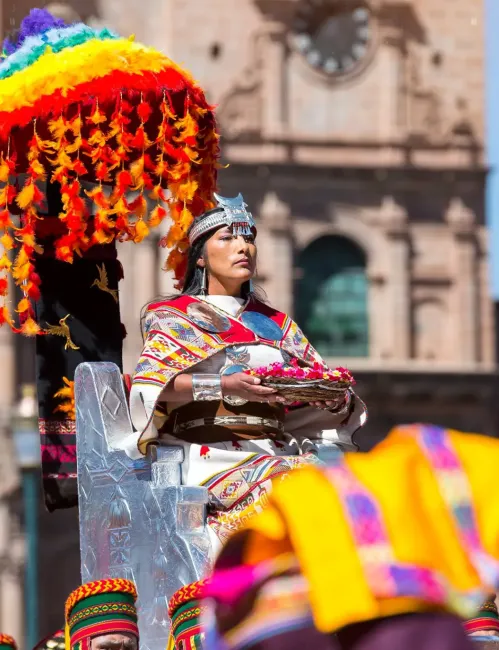
Today, Inti Raymi is celebrated with vivid color and tradition. Everything begins very early, as the Inca's retinue and the Qoya (his wife) set out in procession.
In the gardens of Qoricancha, a ceremony greets the sun with quena flute and drum music. This is the most spiritual moment, as the sun rises over the mountains.
Afterward, the procession heads toward the Plaza de Armas, where the Inca arrives carried by his warriors, and, in the same way, the Qoya, the Inca's wife.
From an elevated platform, the Inca delivers a speech to the people in Quechua, asking the Sun for protection and announcing prosperity. Then, the traditional dances of Cusco begin.
The most eagerly awaited moment of the day happens at Sacsayhuamán, the main site where the Inca, the Qoya, the priests, the warriors, and delegations from every region gather to perform the main ceremony in honor of the sun, with a parade of the four suyos in their own costumes, feathers, and dances.
"Inti Raymi brings thousands of people together at Sacsayhuamán for a ceremony that blends art, history, and Andean spirituality."
Tips for your visit
- Secure your entry: at Inti Raymi, most of the audience stands throughout. Many people bring a small stool for extra comfort.
- Watch out for the sun: June 24th is almost always sunny. Don't forget sunscreen (reapply every 45 minutes), sunglasses, and a cap or hat.
- Wear comfortable clothing: Inti Raymi lasts at least 7 hours. Dress in something that keeps you from feeling too cold or too hot, and wear good walking shoes.
- Bring water and snacks: prices at the venue tend to rise during the festival. It's best to come prepared with your own drinks and something to eat.
- Watch your belongings: pickpockets can be an issue in large crowds. Don't carry valuables in easily accessible pockets or bags.
Inti Raymi is much more than a festival: it's a living window into the soul of the Andean world. Every June 24th, Cusco transforms into the heart of the Tahuantinsuyo, reminding us that history isn't just the past — it's a force that still beats in every dance, every offering, and every ray of sunlight that lights up Sacsayhuamán. If you ever get the chance to experience this with Peru Beyond, don't hesitate: it will be one of those moments that stays with you forever.