Table of Contents Mostrar / Ocultar
Trail Stats · At a Glance
Ranked as the second most visited tourist attraction in Peru after Machu Picchu, Rainbow Mountain (known natively in Quechua as Vinicunca or Winikunka) is one of South America’s most staggering geological wonders. Located deep in the Vilcanota Mountain Range at an elevation exceeding 5,200 meters (17,060 feet), its mineralized ridges present a vivid spectrum of pink, turquoise, golden yellow, and deep terracotta.
However, conquering its high-altitude ridge requires knowledge and respect for the Andes. In this Rainbow Mountain Peru complete guide for 2026, we cover the mineral origin of the colors, realistic trail statistics, a head-to-head comparison with Palcoyo and the Red Valley, and essential medical tips to navigate altitude sickness safely.
1. Quick Comparison Table: Rainbow Mountain Routes (“At a Glance”)
Before booking your trek, compare the primary characteristics of Cusco’s colorful mountain destinations to select the ideal adventure for your stamina, schedule, and photography goals:
| Feature / Destination | Vinicunca (Classic 7 Colors) | Palcoyo (Alternative Rainbow Range) | Pallay Punchu (Apu Taqllo) | Red Valley (Valle Rojo) |
|---|---|---|---|---|
| Maximum Elevation: | 5,200 m (17,060 ft) | 4,900 m (16,076 ft) | 4,700 m (15,420 ft) | 5,050 m (16,568 ft) |
| Hiking Duration: | 1.5 to 2 hrs up / 1 hr down | 40 mins (gentle & flat) | 1.5 hrs steep ascent | +25 mins from Vinicunca |
| Roundtrip Distance: | 7.0 km (4.3 mi) | 3.5 km (2.1 mi) | 5.0 km (3.1 mi) | +2.5 km (1.5 mi) |
| Visual Scenery: | Iconic single pyramid peak | 3 rainbow mountains + stone forest | Sharp jagged ridge (Inca poncho) | Crimson Martian red canyon |
| Daily Foot Traffic: | High (1,200 - 1,800 hikers/day) | Peaceful (100 - 200 hikers/day) | Very Low / Off-the-beaten-path | Moderate to light |
| Horse Rental: | Yes (~80-100 PEN / ~$25 USD) | Unnecessary (flat walk) | Partial by locals | On foot |
| Community Fee: | 25 PEN (~$7.00 USD) | 15 PEN (~$4.00 USD) | 20 PEN (~$5.50 USD) | 20 PEN (~$5.50 USD) |
| Best Suited For: | Iconic bucket-list summit seekers | Families, seniors, peaceful photos | Off-grid hikers & adventurers | Surreal landscape photographers |
›› Expert Tour Recommendation: If you are traveling with children under 12, active seniors, or prefer a serene, less strenuous walk, reserve the Palcoyo Rainbow Mountain Trek. If your lifelong dream is the iconic pointed summit overlooking Mount Ausangate, choose our Rainbow Mountain Vinicunca Trek.
2. What is Vinicunca and Why Does It Have Rainbow Stripes?
The indigenous Quechua name carries deep geographical meaning:
- Wini: Small rounded black stones or pebbles abundant across the high riverbeds.
- Kunka: Neck or narrow pass, referring to the high mountain saddle connecting the valleys.
For centuries, this mountain remained hidden under thick perennial glaciers. Around 2014 to 2015, sustained glacial retreat caused by climate change exposed the sedimentary layers beneath, unveiling marine, lake, and river sediments deposited over 65 million years ago during the Tertiary period.
The Mineralogical Breakdown of the Color Bands:
- Pink & Magenta: Red marine clays, mudstones, and iron-rich siltstones.
- White & Cream: Pure quartz sandstone and calcium carbonate (calcite).
- Vibrant Red & Terracotta: Ferric oxide claystone (oxidized iron).
- Green & Turquoise: Phyllite and clay minerals rich in ferro-magnesian silicates with copper traces.
- Earthy Brown & Mustard: Calcareous sandstones with limonite and sulfurous compounds.
- Golden Yellow: Sandstones infused with sulfur and iron sulfides.
›› Spiritual Context: Local indigenous communities revere Vinicunca as a sacred sanctuary safeguarded by Apu Ausangate (6,384 m / 20,945 ft), the highest and most powerful sacred mountain deity in the Cusco region, considered the divine protector of water, alpacas, and life.
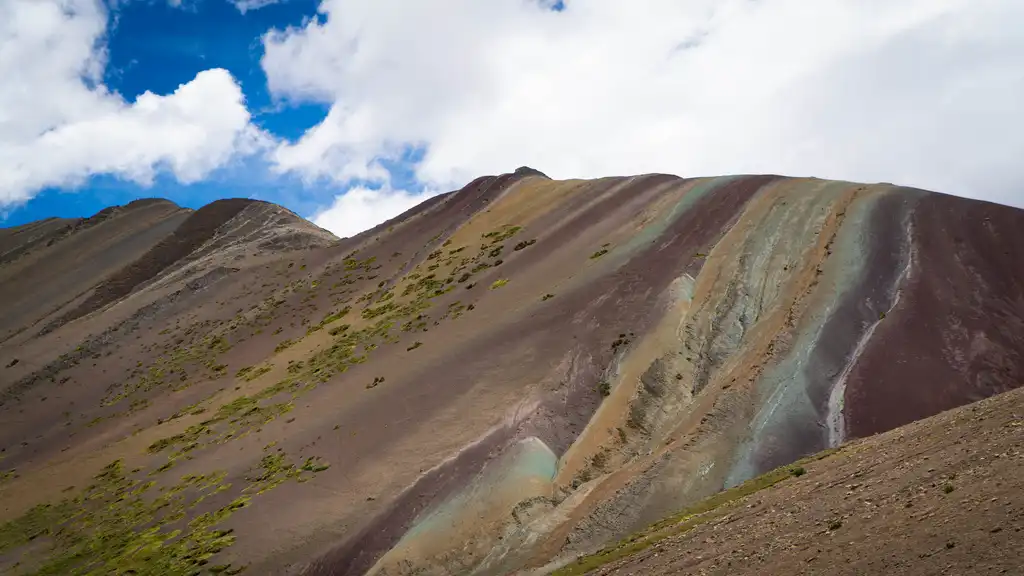
 A close-up view of the natural mineral bands sculpted across the slopes of Vinicunca.
3. Trail Stats & Technical Snapshot
| Parameter | Official Trail Statistic |
|---|---|
| Trailhead Elevation (Phulawasipata): | 4,630 m / 15,190 ft |
| Summit Viewpoint Elevation: | 5,200 m / 17,060 ft |
| Elevation Gain: | +570 meters / +1,870 ft |
| Roundtrip Distance: | 7 km / 4.3 miles (via standard Cusipata route) |
| Hiking Time to Summit: | 1.5 to 2 hours (measured, steady pace) |
| Descent Time: | 1 hour to 1 hour 15 minutes |
| Difficulty Level: | Strenuous (primarily due to thin air/hypoxia) |
| Summit Temperature: | 0 °C to 12 °C (32 °F to 53 °F), sub-zero windchill |
4. Step-by-Step Itinerary from Cusco
A typical day trip to Vinicunca starts before dawn:
- 04:00 - 04:30 AM: Private hotel pickup in Cusco in comfortable, heated tourist vans.
- 06:30 AM: Arrival in the village of Cusipata for an energizing hot breakfast buffet (eggs, bread, quinoa porridge, fresh fruit, and coca tea).
- 07:30 AM: Ascent by road through high alpine valleys to Phulawasipata (4,630 m / 15,190 ft).
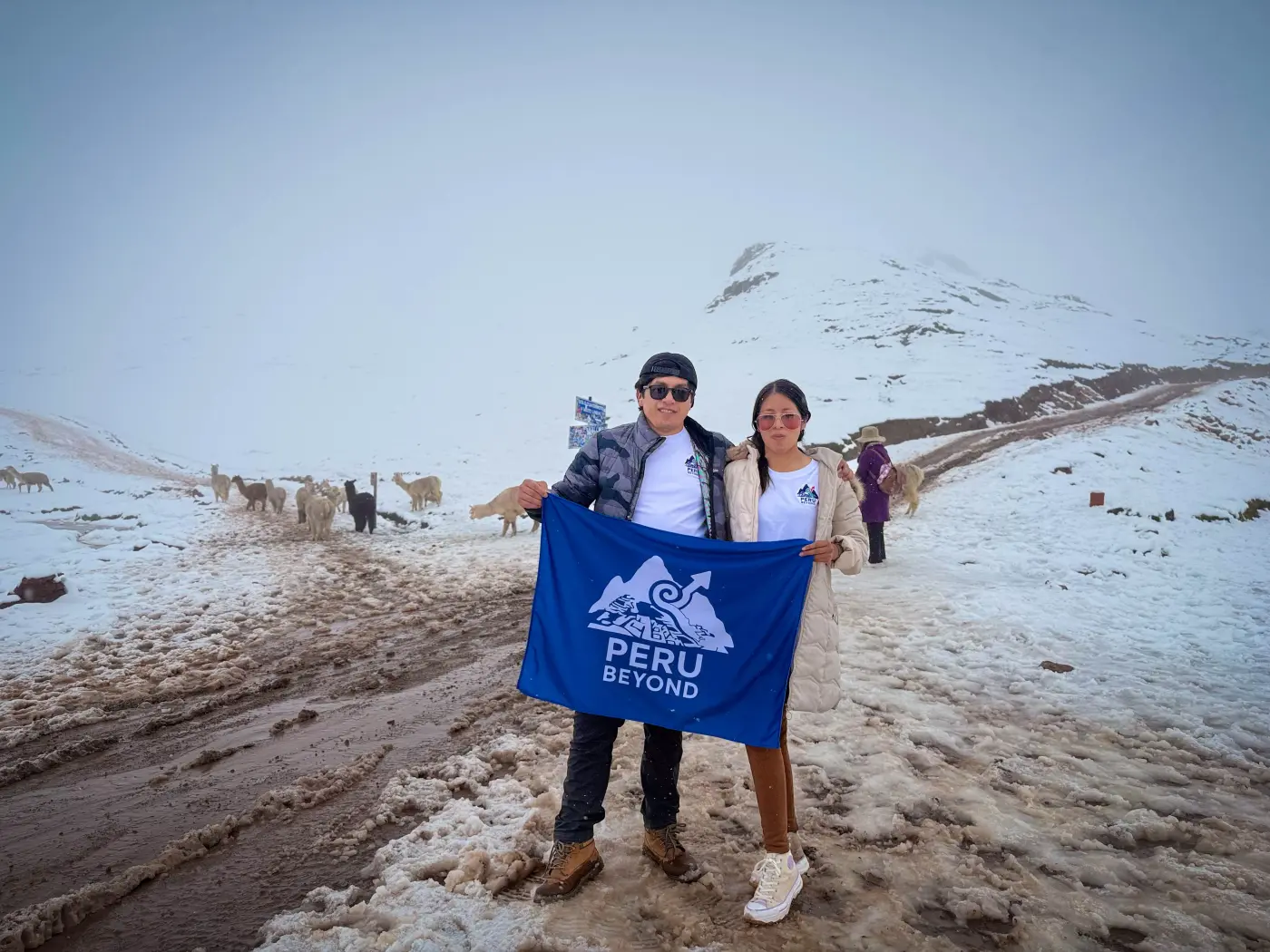
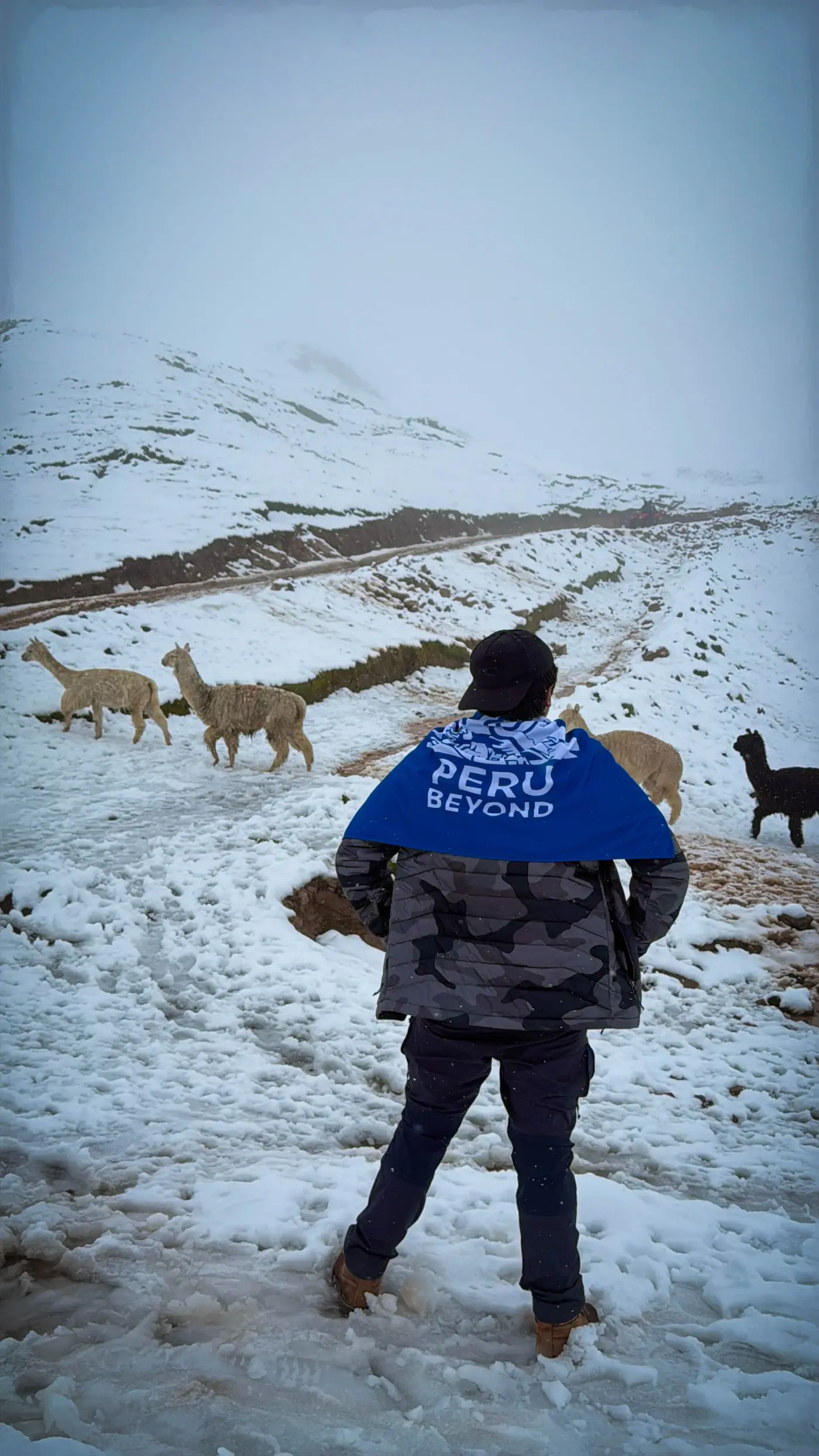
- 08:30 AM: Begin the hike across an open plateau surrounded by grazing alpaca herds.
- 10:00 - 10:30 AM: Reach the 5,200 m summit ridge. Free time for photography, resting, and cultural commentary from your guide.
- 11:00 AM (Optional): Short trek over to the breathtaking Red Valley viewpoint.
- 12:00 PM: Easy downhill hike back to Phulawasipata.
- 01:30 PM: Rewarding hot buffet lunch in Cusipata.
- 04:30 - 05:00 PM: Arrival back in Cusco.
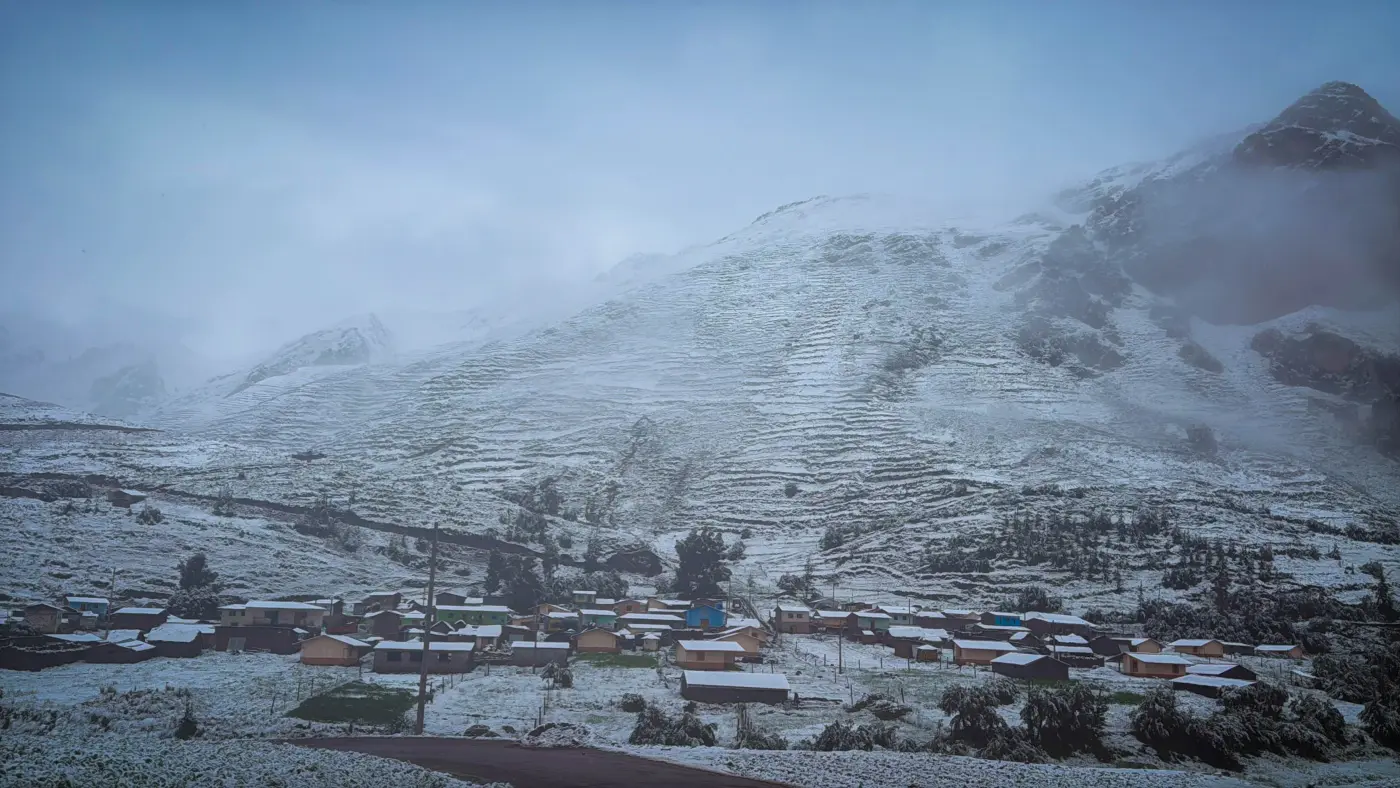 High-altitude hiking beneath the watchful gaze of sacred Mount Ausangate.
5. Medical Guide: Beating Altitude Sickness (Soroche) at 5,200 Meters
At 5,200 meters, atmospheric pressure drops significantly, providing roughly 40% fewer oxygen molecules per breath than at sea level.
Follow these proven steps to prevent acute mountain sickness (soroche):
- Acclimatize First: Do NOT attempt Rainbow Mountain on Day 1 or Day 2 in Cusco. Schedule this trek for Day 3, 4, or 5, after visiting the Sacred Valley (2,800 m) or Machu Picchu (2,430 m).
- Hydrate Generously: Drink 2 to 3 liters of water daily. Dehydration worsens altitude symptoms.
- Eat Light Dinners: Avoid alcohol and heavy red meats the night before your trek. Choose easily digestible carbohydrates and warm soups.
- Coca & Muña Herbs: Traditional coca leaf tea acts as a natural vasodilator, improving oxygen uptake. Muña helps soothe digestive upset.
- Medical Oxygen on Board: All Peru Beyond guided tours carry certified medical first-aid kits and emergency oxygen tanks.
6. What to Pack in Your High-Altitude Daypack
- Thermal base layer top and bottoms.
- Windproof and waterproof outer jacket with a hood.
- Warm fleece beanie, insulated gloves, and neck gaiter.
- Polarized UV400 sunglasses (essential against alpine glare).
- SPF 50+ sunscreen and moisturizing lip balm.
- Worn-in hiking shoes with deep gripping tread.
- Trekking poles with rubber tips (reduces knee impact by 25%).
- Cash in Peruvian Soles (PEN) for horse hire (~100 Soles) and restrooms.
- High-energy snacks: dark chocolate, nuts, and coca candies.
Reserva tu experiencia garantizada con Peru Beyond
Boletos oficiales, traslados privados, guías certificados y asistencia 24/7 en español, inglés y portugués.